La Cecchina
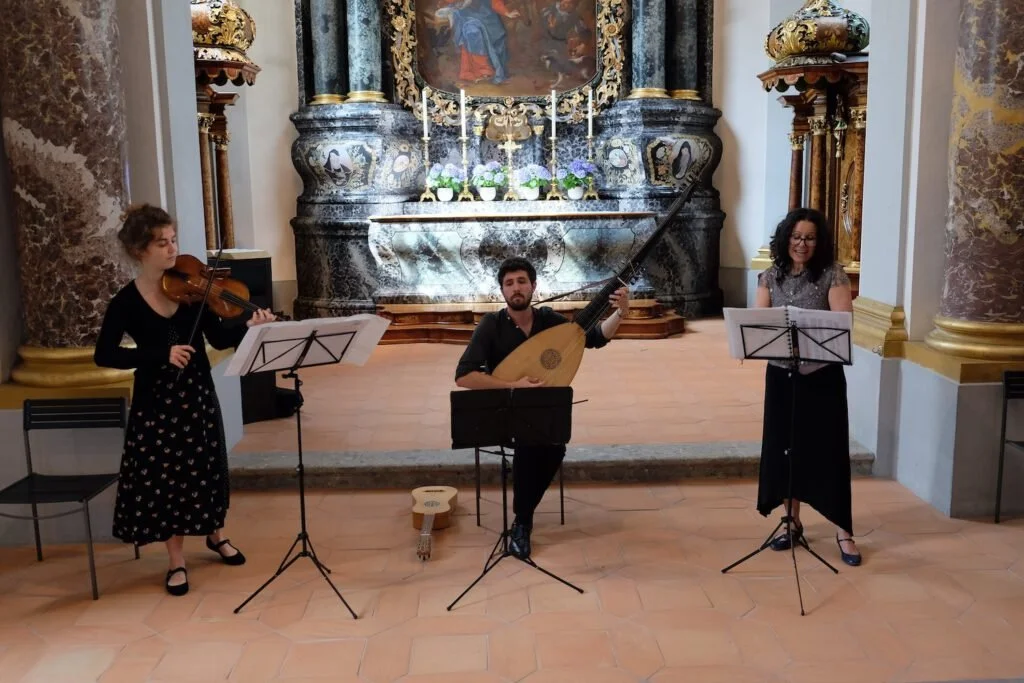
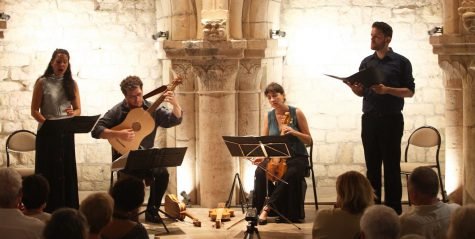
La Cecchina was founded in 2004 at the Schola Cantorum Basiliensis, where all its members specialised in early music. The ensemble’s repertoire ranges from the late 16th to the late 17th century, a period marked by the transition from polyphony to accompanied monody. This allows the group to build bridges between two musical worlds that are often presented as clearly separate: the Renaissance and the Baroque.
Since its foundation, La Cecchina has performed at numerous festivals in France, Spain, Italy, Belgium and Switzerland, and all its members are established performers in the field of early music. In collaboration with Swiss Radio DRS, the ensemble recorded Francesca Caccini’s Il primo libro.
PROGRAMMES
DACA, BAILEMOS CARILLO!
By the end of the 15th century, the boundaries between popular and learned culture in Europe had become increasingly fluid. From this period onwards, we find works by cultivated composers reworked and absorbed into popular tradition, as well as courtly pieces drawing on popular repertories.
A similar exchange took place between dance and song, each influencing the other more strongly than in previous centuries.
UN CHIARO OSCURO NEL PRIMO BAROCCO
At the end of the Renaissance, Gesualdo da Venosa composed his famous five-voice madrigals — works still regarded today as striking examples of extravagance and musical excess, often pushing expression to its limits.
The programme presented by June Telletxea and Ana Arnaz (sopranos), together with Andreas Arend (theorbo and lute), places these madrigals alongside a lute repertoire composed with great skill by Simone Molinaro, then organist at Genoa Cathedral.
LA VITA CHE PASSA…
Prima or seconda pratica? The emergence of the new recitative style in early 17th-century Italy paved the way for the dominance of basso continuo: a new musical practice in which the text took on a central role, gradually displacing polyphony.
The programme is built around emblematic figures such as Francesco Cavalli, Claudio Monteverdi and Alessandro Grandi.